
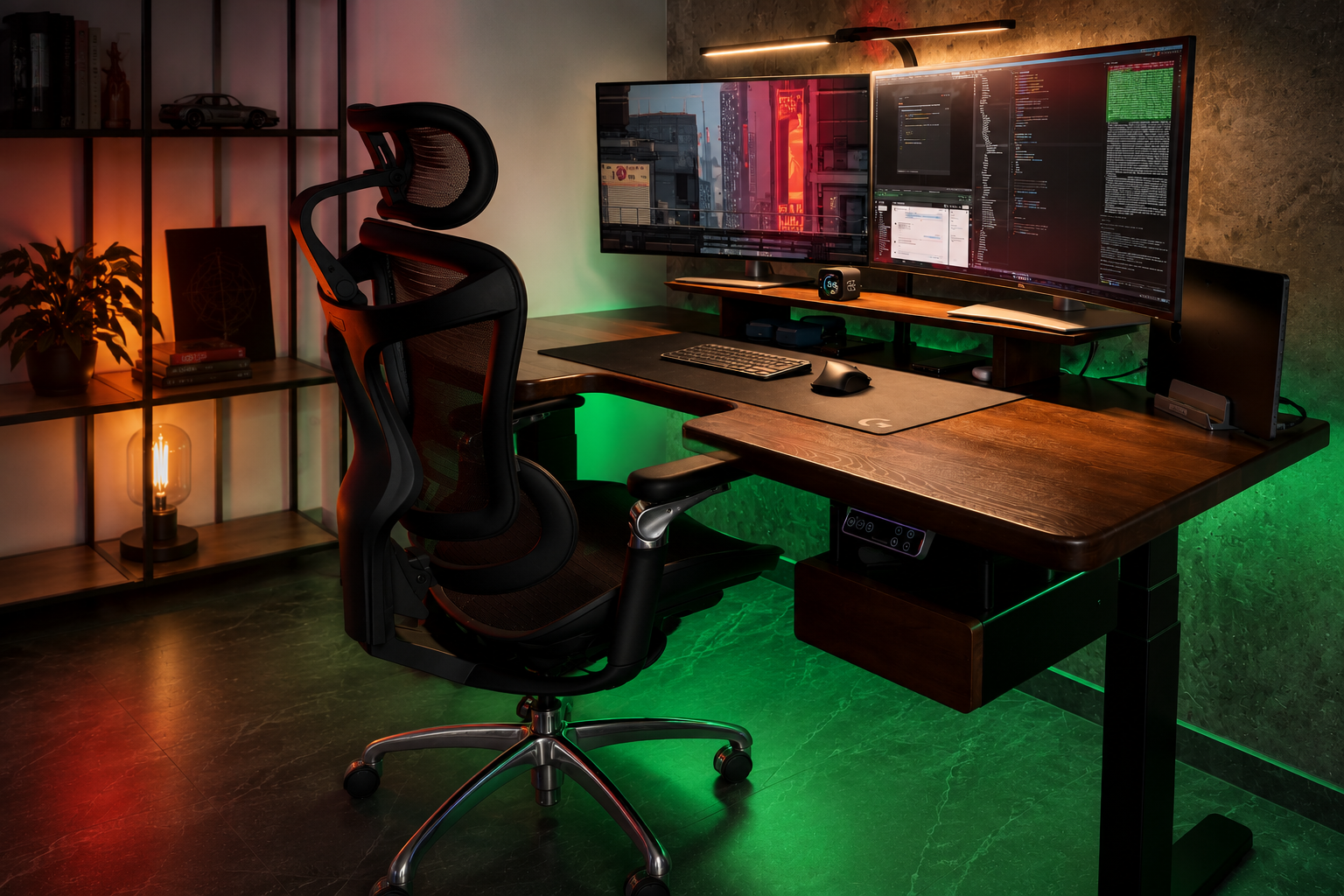
Everyone is familiar with the situation where motivation is present, the task list is compiled, deadlines are clear, but work still isn't progressing. Attention constantly wanders, thoughts shift to extraneous matters, and within a few hours, a feeling of fatigue sets in, as if a full workday has passed. Many attribute this to a lack of discipline or willpower, although in practice, the reason often turns out to be much simpler—a poorly organized workspace.
Workspace organization is one of the factors determining productivity, decision-making quality, and fatigue levels at the end of the day. Regardless of whether a person works in an office, at home, or studies remotely, a properly organized work environment helps maintain attention longer, complete tasks faster, and feel significantly better. Let's talk a bit more about how the workspace affects work.
Why Workspace Comfort is Directly Linked to Concentration
Concentration is one of the most valuable resources for modern people. However, attention cannot be maintained by willpower alone. Our brain constantly analyzes incoming information not only from the outside but also from our own body. That's why productivity and comfort are closely related concepts.
If, while working, you have to search for a comfortable position, strain your neck, support your back, change your leg position, or experience discomfort in your hands, part of your cognitive resources is automatically spent processing these sensations. As a result, a person gets tired faster, is distracted more often, and performs worse on complex intellectual tasks.
The most common sources of physical discomfort are the following factors:
-
incorrect table height;
-
uncomfortable monitor placement;
-
lack of lumbar support;
-
constant tension in the shoulder girdle;
-
uncomfortable keyboard and mouse placement;
-
limited legroom.
Each of these factors, individually, might seem insignificant, but together they create a constant background of tension that reduces concentration at the workplace.
Many of these problems can be eliminated by using a height-adjustable desk, which can be easily adapted to the user's height.
How Posture Affects Fatigue During the Day
Most modern professions involve prolonged sitting. At the same time, static load is considered one of the most exhausting for the body.
During prolonged sitting, the muscles of the back, neck, and shoulders work almost continuously, holding the body in one position. Even if the load seems small, after a few hours it leads to the accumulation of muscle tension, impaired blood circulation, and a feeling of general fatigue. Modern ergonomic chairs partly help solve this problem. For example, the LiberNovo ergonomic chair uses dynamic back support that adapts to the user's movements and provides constant lumbar support even when changing body position.
The first signs of accumulated fatigue usually manifest as follows:
-
it becomes harder to maintain attention on a single task;
-
the number of small errors increases;
-
there's a desire to constantly get distracted;
-
decision-making speed decreases;
-
a feeling of heaviness in the back, shoulders, and neck;
-
a sense of exhaustion persists after the workday.
All these symptoms are often perceived as a consequence of a heavy workload, although the organization of the workspace at home or in the office plays a significant role. When the body is in a more natural position, muscles work much more efficiently, and the level of fatigue accumulates more slowly.
Workspace and Its Impact on Productivity
The human brain constantly processes surrounding information, even if we are not aware of it. That's why the condition of the desk affects concentration significantly more than generally believed.
A large number of random items, documents, wires, packaging, and other trifles create what is called visual noise. Each such detail becomes a potential irritant that imperceptibly distracts attention.
To make the workspace conducive to productivity, it is important to adhere to a few simple principles:
-
leave only truly necessary items on the table;
-
store documents in designated places;
-
regularly maintain order;
-
minimize the number of random distracting objects;
-
organize the convenient placement of frequently used items.
The main task is to create a space where attention will not constantly switch to unnecessary irritants, and searching for necessary items will not become an additional source of stress.
Lighting as a Factor of Attention and Work Efficiency
Lighting is one of the most underestimated factors affecting work efficiency. The quality of light determines not only eye comfort but also the speed of fatigue onset.
With insufficient lighting, the visual system starts to work under increased strain. The eyes constantly have to adapt to distinguish details, and the brain expends additional resources to process visual information.
Excessively bright light is no less harmful. Glare on the monitor, sharp contrasts between the screen and the surrounding space, or improperly positioned light sources force the eyes to constantly readjust.
Most often, problems are caused not by the level of illumination itself, but by errors in its organization:
-
working with insufficient natural light;
-
placing the monitor opposite a window;
-
strong glare on the screen;
-
using excessively cold or too dim artificial lighting;
-
sharp contrast between the screen and the surrounding environment.
Properly organized lighting allows for longer periods of high concentration, reduces eye strain, and helps avoid feeling tired early in the workday.
How the Environment Shapes Work Habits
The workplace also influences a person's behavior. If a person sits down at a specially organized workplace every day, the brain gradually begins to perceive this space as a signal for concentration. This effect is called contextual anchoring of behavior.
Over time, attention shifts to work mode much faster. The opposite happens when work is done in places intended for rest. In this case, it is harder for the brain to separate different types of activity, leading to an increased likelihood of distractions, procrastination, and constant switching between tasks.
A well-organized work environment helps to:
-
start working faster;
-
maintain attention more easily;
-
be distracted less often by extraneous matters;
-
plan work time more effectively;
-
return to tasks faster after a break.
Gradually, these conditions become part of a stable system of productive habits, making work easier even during periods of heavy workload.
Common Mistakes in Workspace Organization
Even expensive equipment does not guarantee high productivity if the space itself is organized incorrectly.
The following problems are especially common:
-
working in bed or on the sofa;
-
lack of a permanent workspace;
-
a cluttered desk;
-
incorrect screen placement;
-
insufficient lighting;
-
mixing work and home zones;
-
lack of regular order in the workplace.
Each of these mistakes may seem insignificant on its own. However, during daily work, they gradually increase fatigue, reduce the ability to concentrate, and create the feeling that even simple tasks require too much effort.
Why Productivity Starts with the Workspace
High productivity is rarely solely a result of willpower or personal discipline. Much more often, it is a result of a combination of good habits and a well-organized environment.
The workspace and productivity are closely linked. A comfortable workspace allows the brain to focus on tasks, rather than constantly processing signals of discomfort. Ergonomic posture reduces physical tension, order reduces the number of distracting factors, and quality lighting helps maintain attention and efficiency for longer.
That's why changing the workspace often becomes the first step towards increasing efficiency. Even small improvements can reduce fatigue, make concentration easier, and make the work process more stable and comfortable.
to share:
Why you should choose a height-adjustable desk: impact on health and posture
How to Set Up an Ergonomic Home Workspace: Furniture, Lighting, and Proper Posture