
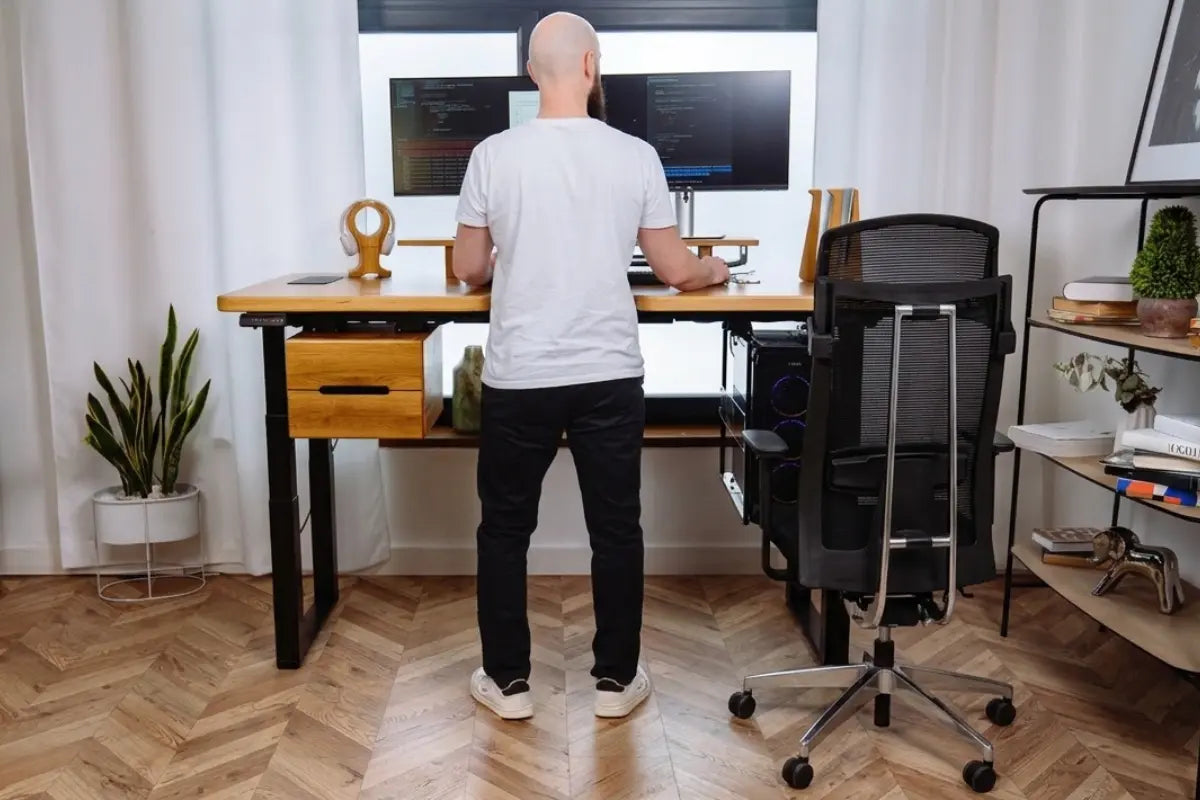
For many people, a modern workday is spent almost entirely sitting down. Office, laptop at home, meetings, correspondence – as a result, a person spends 6–10 hours a day at a desk, hardly changing their posture. At first glance, this is normal and convenient, but such static strain gradually becomes one of the main causes of back pain, fatigue, and reduced productivity.
A height-adjustable desk is not just a modern interior element, but a tool that helps rethink the very approach to organizing a workspace.
Why Prolonged Sitting Is a Problem
The human body is not adapted to long, motionless sitting. When a person stays in one position for a long time:
-
blood circulation in the legs and pelvic area slows down
-
the load on the lumbar spine increases
-
back and neck muscles become overstrained
-
overall joint mobility decreases
Even if the chair is ergonomic, it only partially compensates for the problem. The sitting posture itself limits the body's natural activity.
Over time, this can manifest as chronic fatigue, a feeling of "tightness" in the back, headaches, and decreased concentration.
How a Height-Adjustable Desk Works
The main idea of such a desk is the ability to easily change body position throughout the day: work sitting and standing, without interrupting the workflow.
Modern models allow:
-
smoothly raising and lowering the tabletop
-
fixing a comfortable height for the user's stature
-
quickly switching between "sitting" and "standing" modes
Thus, a person does not "get stuck" in one position, but gets the opportunity to move naturally even while working.
Impact on Posture and Spine
One of the key advantages of height-adjustable desks is the reduction of spinal load.
When a person works standing:
-
pressure on intervertebral discs decreases
-
core muscles work more actively
-
it's easier to maintain a natural back position
But it's important to understand: working standing is not a substitute for sitting, but its complement. The best effect is achieved precisely by alternating positions.
Regular change of position helps to:
-
reduce the risk of posture curvature
-
reduce tension in the neck and shoulder area
-
maintain a more natural position of the pelvis and back
Over time, the body "gets used" to a more correct posture, especially if the workplace is additionally ergonomically adjusted.
Impact on Well-being and Productivity
Physical condition directly affects mental performance. When the body remains in a static position for a long time, the brain receives less oxygen, which affects concentration.
By alternating sitting and standing work:
-
the feeling of fatigue in the afternoon decreases
-
energy levels increase without caffeine
-
concentration on tasks improves
-
"getting stuck" on one task is reduced due to changing position
Many users note that even simply standing up for 10–15 minutes every hour makes the workday more "lively" and less exhausting.
How to Properly Use a Height-Adjustable Desk
To get real benefits, it's important not just to buy a desk, but to integrate it into your work habits.
A few practical recommendations:
-
alternate positions every 40–60 minutes
-
don't stand all day without a break
-
ensure the monitor is at eye level
-
keep shoulders relaxed, don't "hunch" over the desk
-
use comfortable footwear or a mat for standing work
The main mistake is a sharp transition to prolonged standing work. The body needs time to adapt.
Who Would Benefit Most from Such a Desk
Height-adjustable desks are especially beneficial for:
-
office workers
-
those who work from home
-
programmers, designers, analysts
-
people with a sedentary lifestyle
-
those who already experience discomfort in the back or neck
But in practice, such a desk suits almost anyone who spends a significant part of the day at a computer.
Summary
A height-adjustable desk is a way to make the workday more dynamic and physiologically comfortable. It doesn't solve all the problems of a sedentary lifestyle, but it significantly reduces its negative impact.
Regular changes in body position, proper workspace setup, and small movement habits throughout the day can noticeably improve well-being, posture, and overall productivity without much effort.
And in this sense, such a desk is not just furniture, but an investment in a healthier and more sustainable work rhythm.
If you are only considering switching to a height-adjustable desk, it is worth paying attention to the adjustment range, load capacity, and stability of the structure – these are the characteristics that most affect comfort in daily work. Not sure which desk is right for you? Message us on Telegram @TEHNOTABLE_UA – we will help you choose a model that best suits your needs, work tasks, and space.
to share:
How to Properly Adjust Desk Height: Ergonomics for Home and Office
Why Your Workspace Impacts Productivity: The Connection Between Comfort, Concentration, and Fatigue