
Varicose veins are traditionally explained simply: either you stand too much, or you sit too much. These two positions are usually cited as the main culprits of vein problems.
But is it really about body posture?
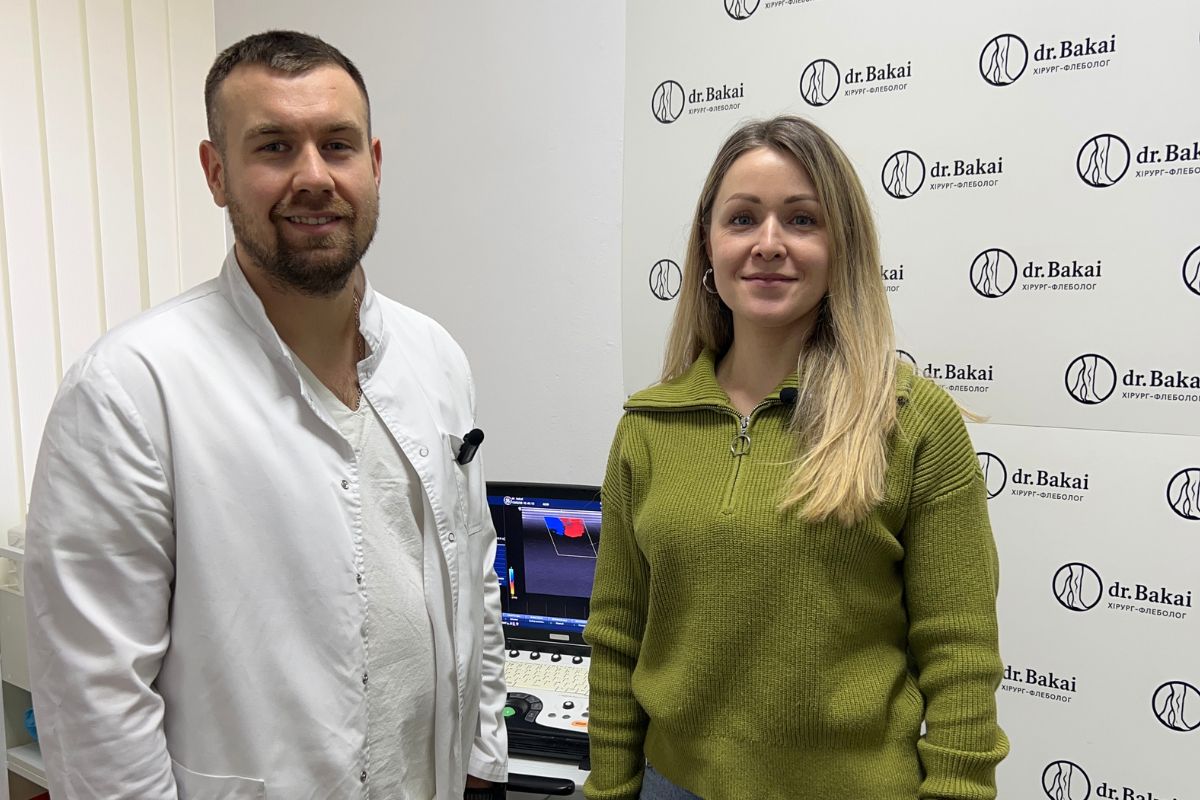
We discussed this issue with phlebologist Mykhailo Bakai, who consults patients at Kyiv Railway Clinical Hospital No. 1.
Does standing work cause varicose veins?
One of the most common fears is prolonged standing.
From a physiological point of view, standing itself is not a pathological factor. Something else plays a key role – static load.
When a person remains motionless for a long time, the muscles practically do not work. It is muscle activity that ensures effective venous outflow.
In other words:
varicose veins are not associated with standing, but with prolonged immobility.
Sedentary work: why the risks are higher than they seem
Sitting is often perceived as a "safer" option for load.
However, clinical observations show a different picture.
With many hours of sitting:
— venous outflow slows down
— muscle pump activity decreases
— intra-venous pressure increases
— congestion occurs
That is why prolonged sitting without movement is considered one of the significant risk factors.
What happens to veins during statics
The venous system of the lower extremities does not have a separate anatomical pump. Its function is performed by muscles.
During movement:
✔ muscles contract
✔ blood effectively moves upwards
During immobility:
✔ venous outflow slows down
✔ pressure in the veins increases
✔ conditions for venous congestion are formed
This mechanism is equally relevant for both sitting and standing.
The main risk factor that is often ignored
In phlebologist practice, the key factor is not posture, but the duration of statics.
It is the lack of movement that creates the basic prerequisites for impaired venous outflow.
This explains why:
✔ office workers
✔ beauty industry specialists
✔ drivers
✔ specialists with static loads
often have similar complaints.
Why changing position works
Regular variation of body position:
— activates the muscle pump
— improves hemodynamics
— reduces congestion
— reduces static load
In clinical practice, a change of position approximately every 40-60 minutes is considered optimal.
Movement as a basic strategy for vein health
From the perspective of vascular physiology, even short periods of dynamics are important.
Intensive exercise is not necessary – regular muscle activation is sufficient.
Video interview with a phlebologist
The full conversation with phlebologist Mykhailo Bakai can be viewed in video format:
to share:
Height-Adjustable Manicure Table: Ergonomics and Comfort in Your Work
Why Hemorrhoids Are a Common Consequence of Sedentary Work: Doctor's Explanation and What to Do About It