
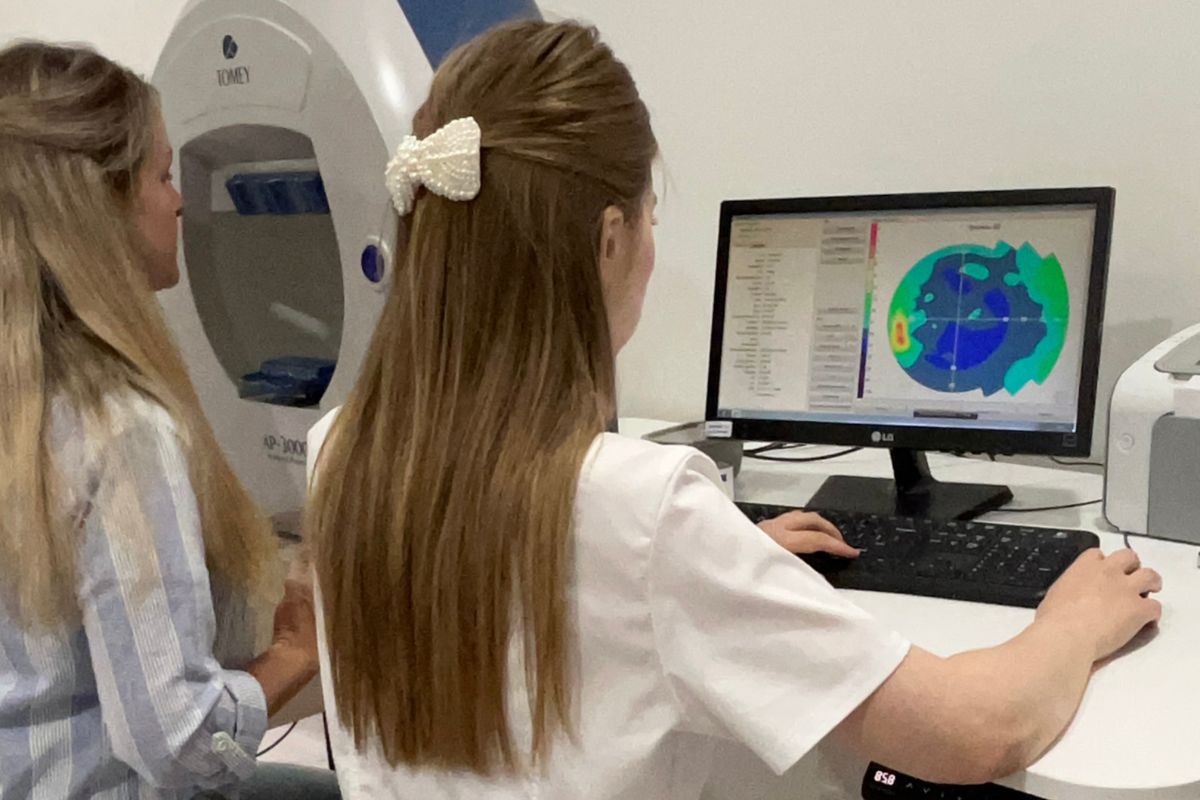
There are no trifles in medical practice. This is especially true in ophthalmology, where the doctor spends many hours taking precise measurements, and patients — from children to the elderly — need the most comfortable conditions during the examination. This is where not only equipment, but also the ergonomics of the workplace come to the fore. One of the key solutions is height-adjustable tables , which have long become a standard in leading clinics in the USA and Europe.
Why table height matters
Traditional medical tables have a fixed height, which creates problems for both the doctor and the patient. If the equipment is difficult to adjust to the patient’s height or position, the examination is delayed and the doctor is forced to work in an uncomfortable position. This increases the risk of occupational musculoskeletal disorders.
According to the World Health Organization, over 60% of healthcare workers worldwide complain of back or neck pain caused by working in a static position . For ophthalmologists, this figure is even higher, as most examinations require precise body positioning and concentration.
International practice experience
In clinics in the USA, Israel, and EU countries, the use of adjustable tables for diagnostic equipment is already established practice.
For example, a report from the American Academy of Ophthalmology notes that ergonomic workstations can reduce examination time by 15–20% and reduce the number of physician complaints of musculoskeletal pain by 30% .
The European Society for the Study of Vision and Ophthalmology (EVER) emphasizes that adjusting the working height is particularly important in pediatric ophthalmology: the correct position of the equipment reduces anxiety in children and increases the accuracy of examination results .
Benefits for the patient
For the patient, an adjustable table means no unnecessary stress.
-
Children can undergo diagnostics without fear of bulky equipment.
-
Elderly people do not experience physical discomfort during the procedure.
-
The process becomes faster, because the doctor adjusts the height in one movement.
A study published in the Journal of Ophthalmology (2022) showed that a comfortable position during an eye exam increases patient satisfaction and trust in the doctor by 25% .
Benefits for the doctor
For a doctor, a height-adjustable desk is primarily a prevention of occupational diseases.
-
The static load on the back and neck is reduced.
-
It is possible to work both sitting and standing, alternating positions.
-
Diagnostic accuracy increases due to optimal device placement.
According to a study by the European Ergonomics Association (2021), doctors who work at adjustable desks demonstrate 18% higher productivity and 32% less reporting back pain .
Example of implementation in Ukraine
Among progressive Ukrainian ophthalmologists is Dr. Sofia Ihorivna Zakharchuk , head of the refractive department of the VISIOBUD ophthalmology clinic in Kyiv . She has experience working in the United States of America, Malta, Israel and Poland, and actively implements international approaches in her practice.
A height-adjustable table from TEHNOTABLE was installed in her office, which houses diagnostic equipment for eye testing. This allows for even better quality examinations, while paying maximum attention to the main thing - the patient.
Conclusion
A height-adjustable table is not just furniture. It is a tool that changes the diagnostic process, making it comfortable for the patient and safe for the doctor.
Global practice and research confirm that investments in ergonomics are investments in the quality of medical care and patient trust.
to share:
How to choose a chair for a schoolchild: what you need to know about orthopedic solutions
Height-adjustable desk in your smartphone: why it's important to change your sitting/standing posture