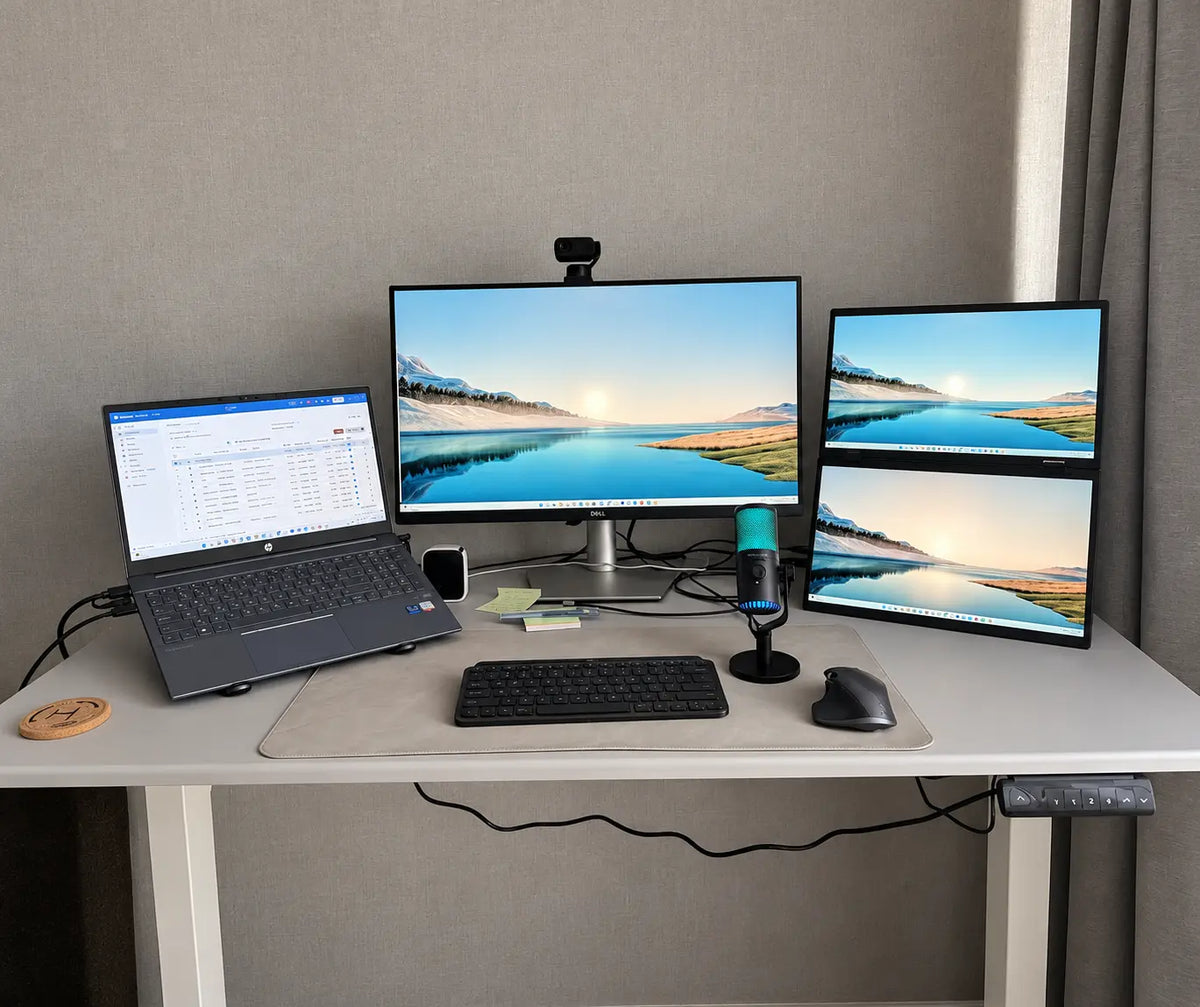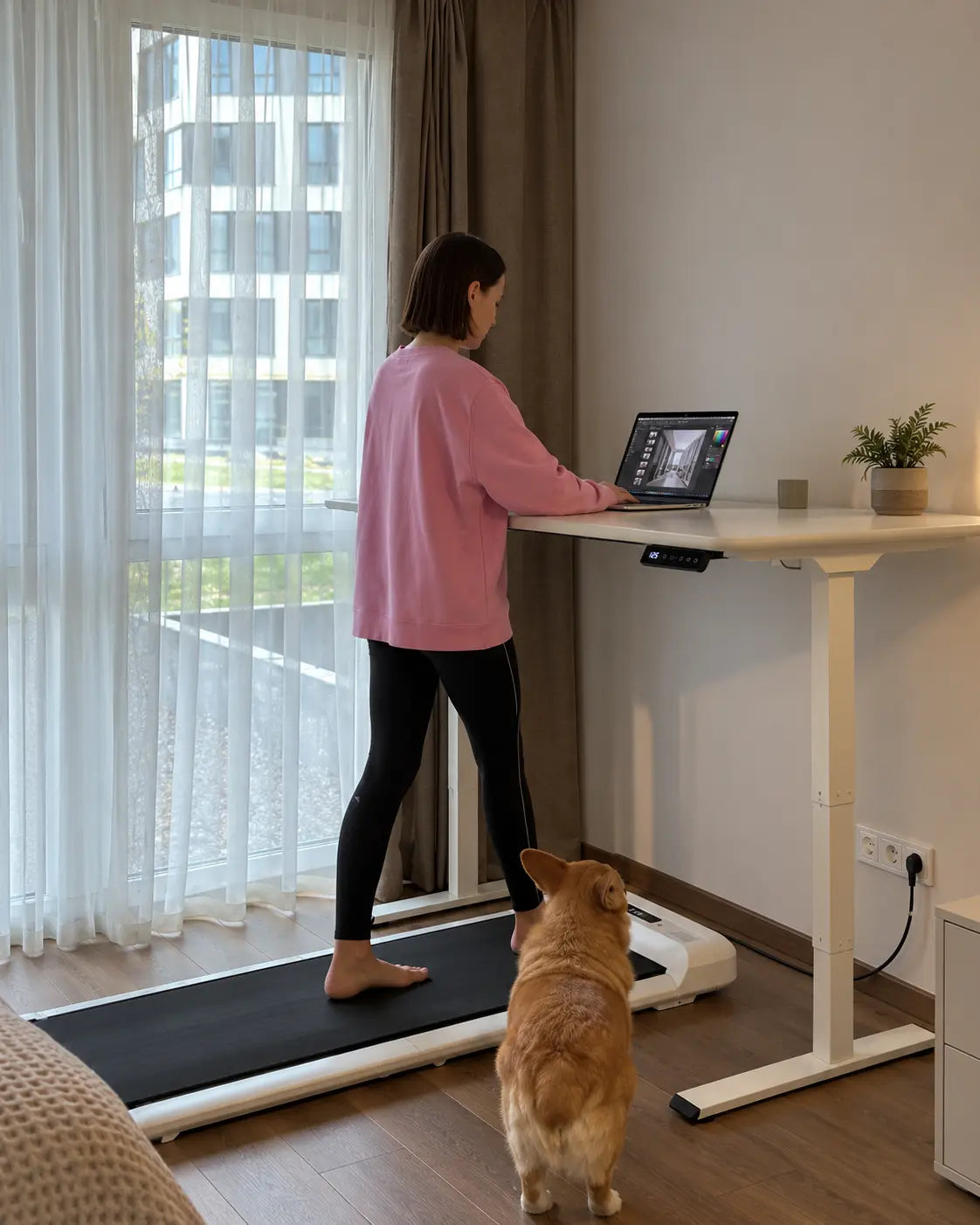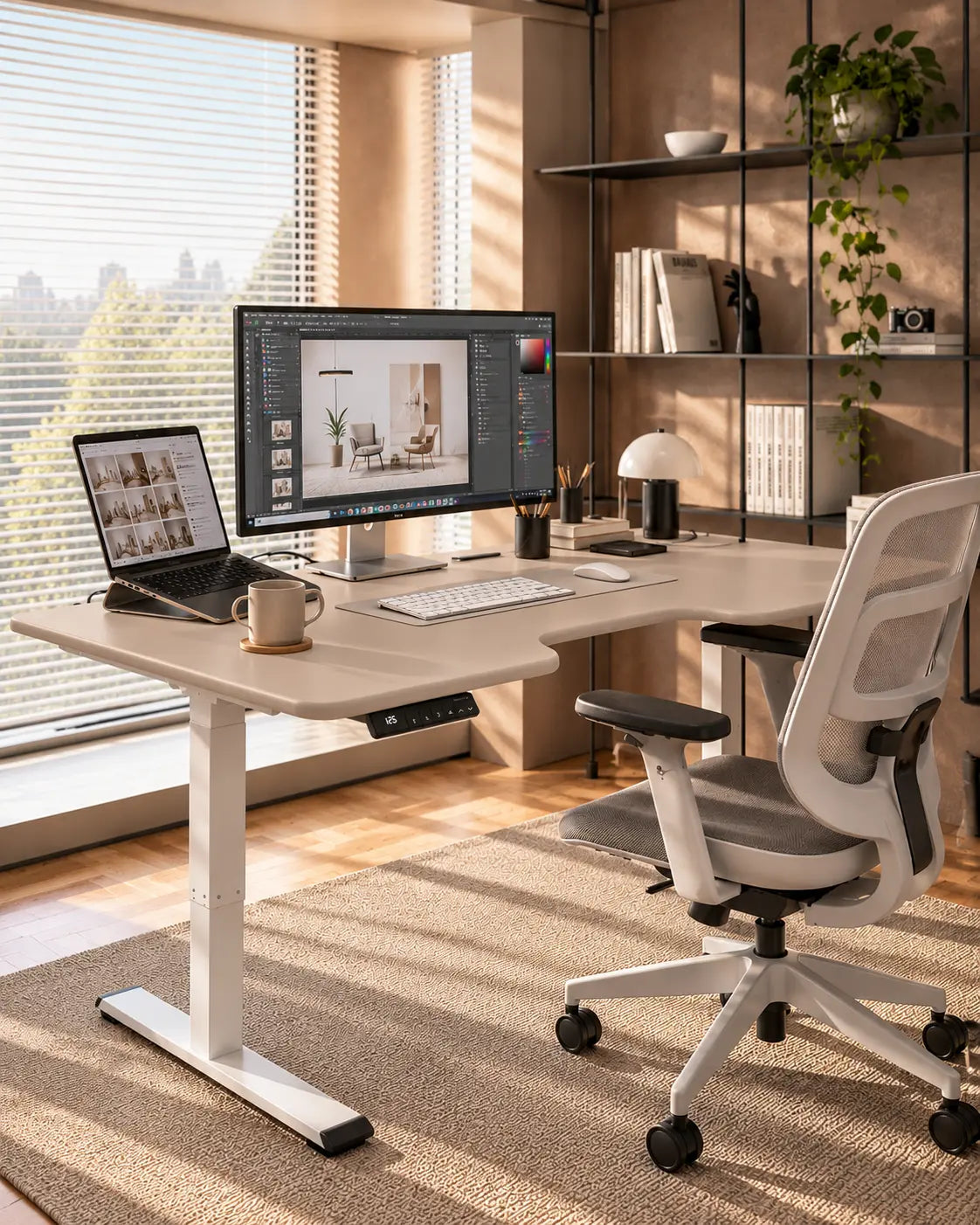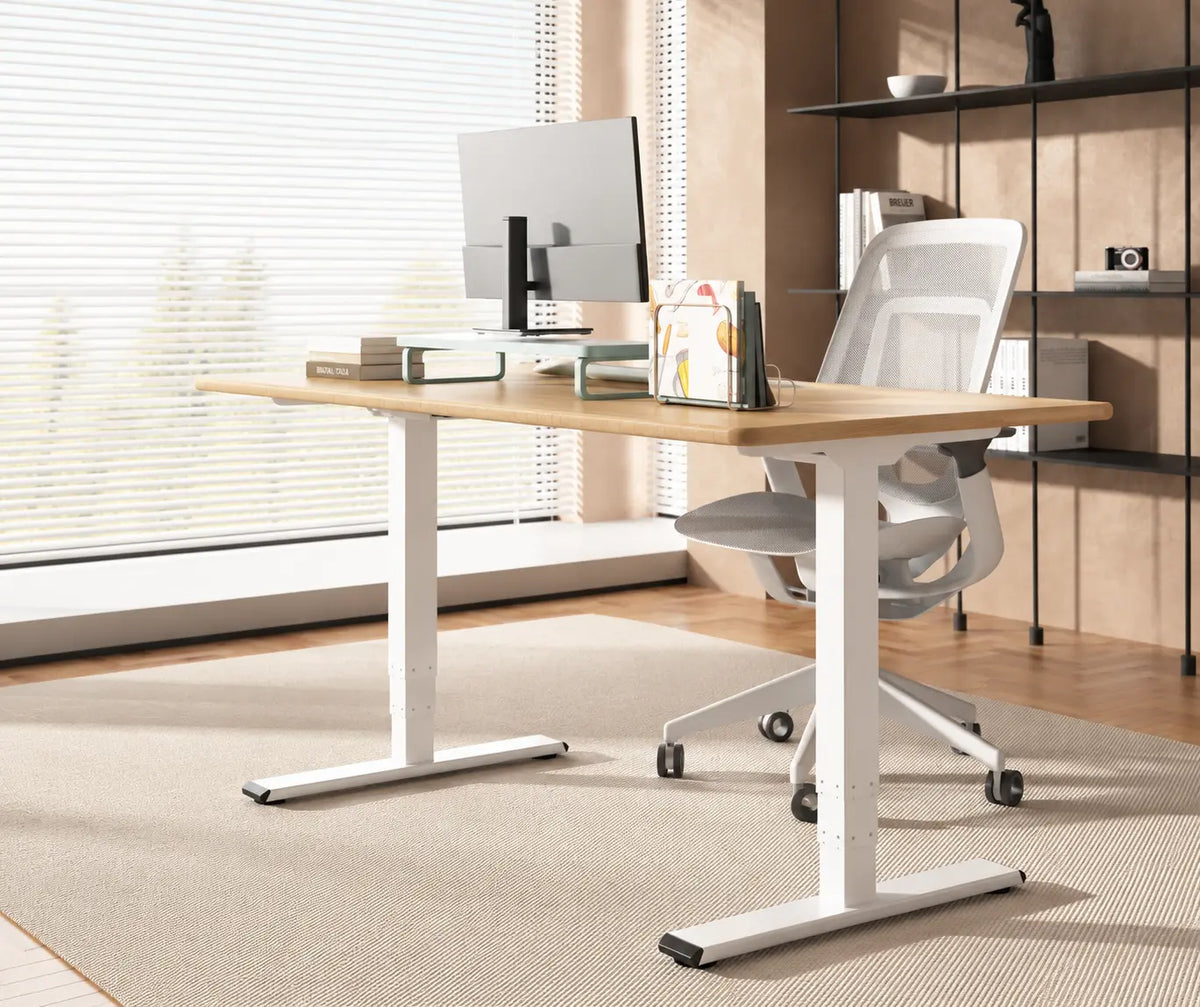
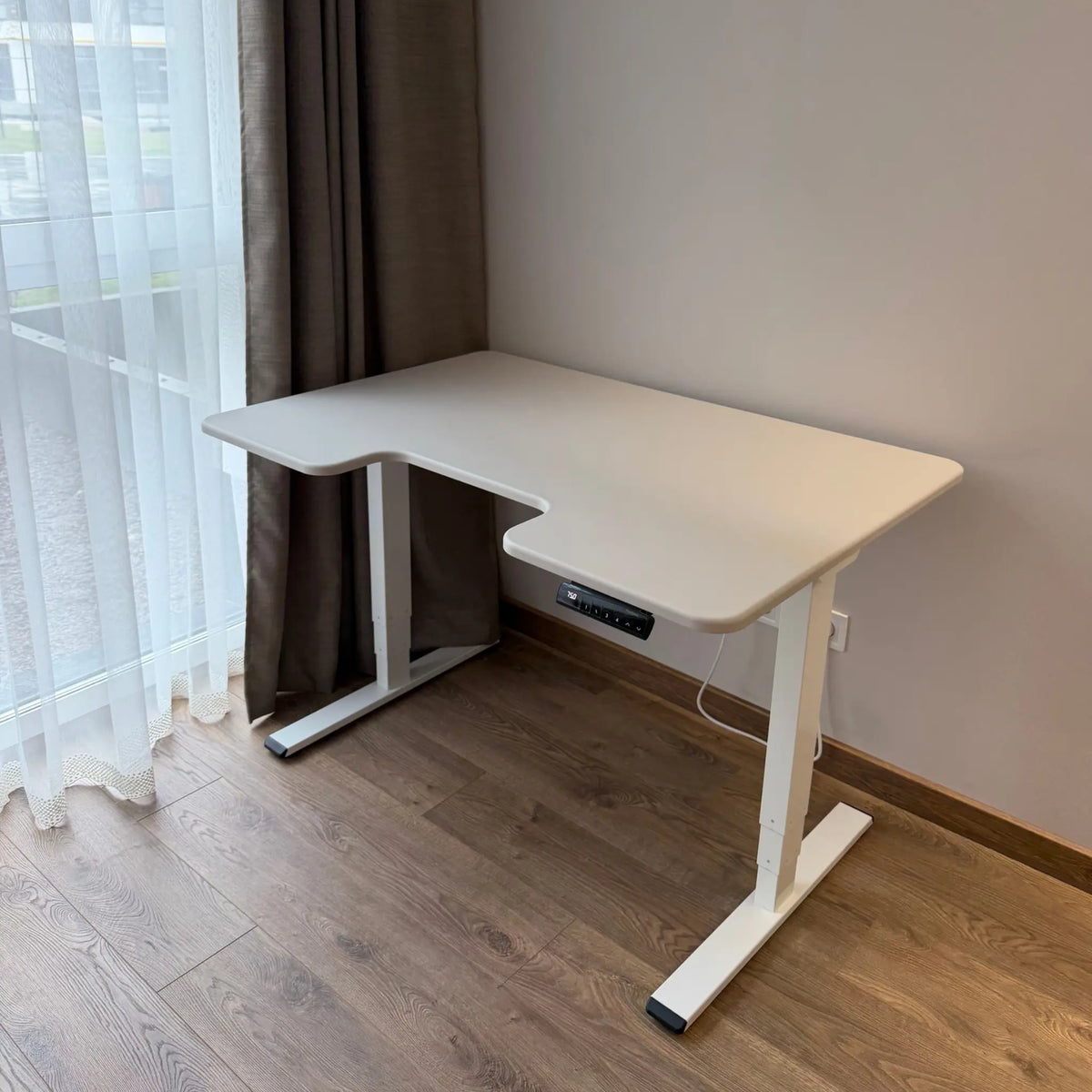
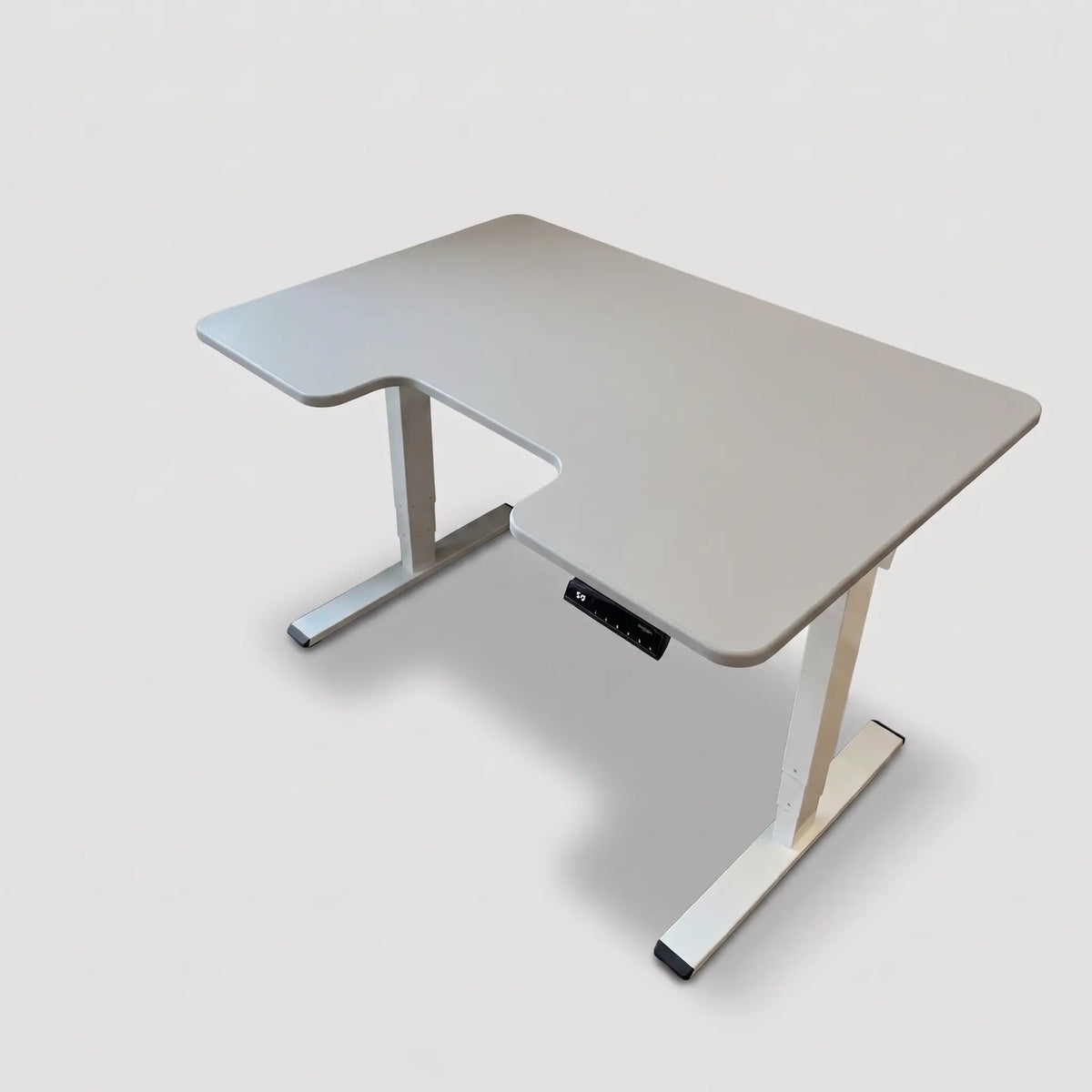
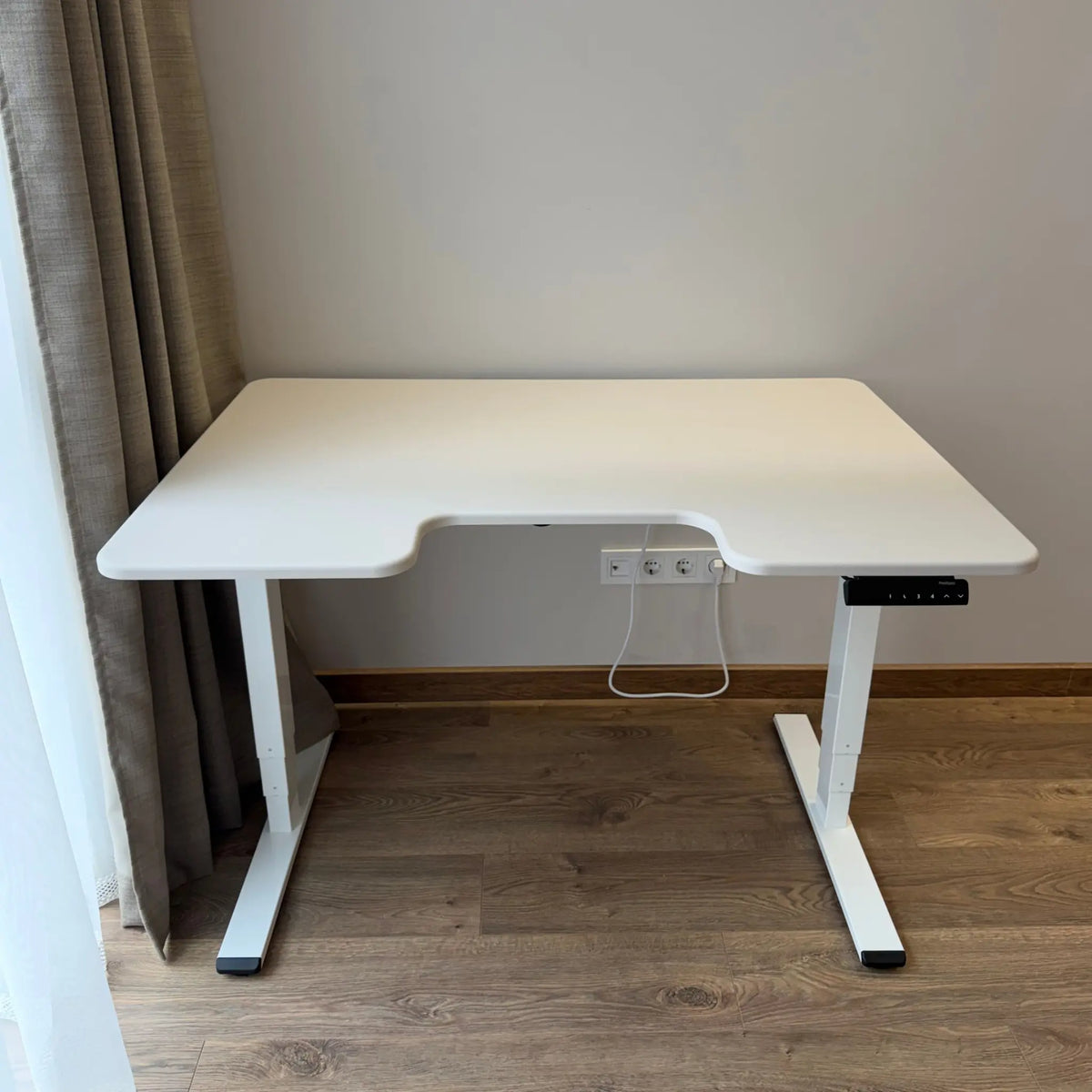
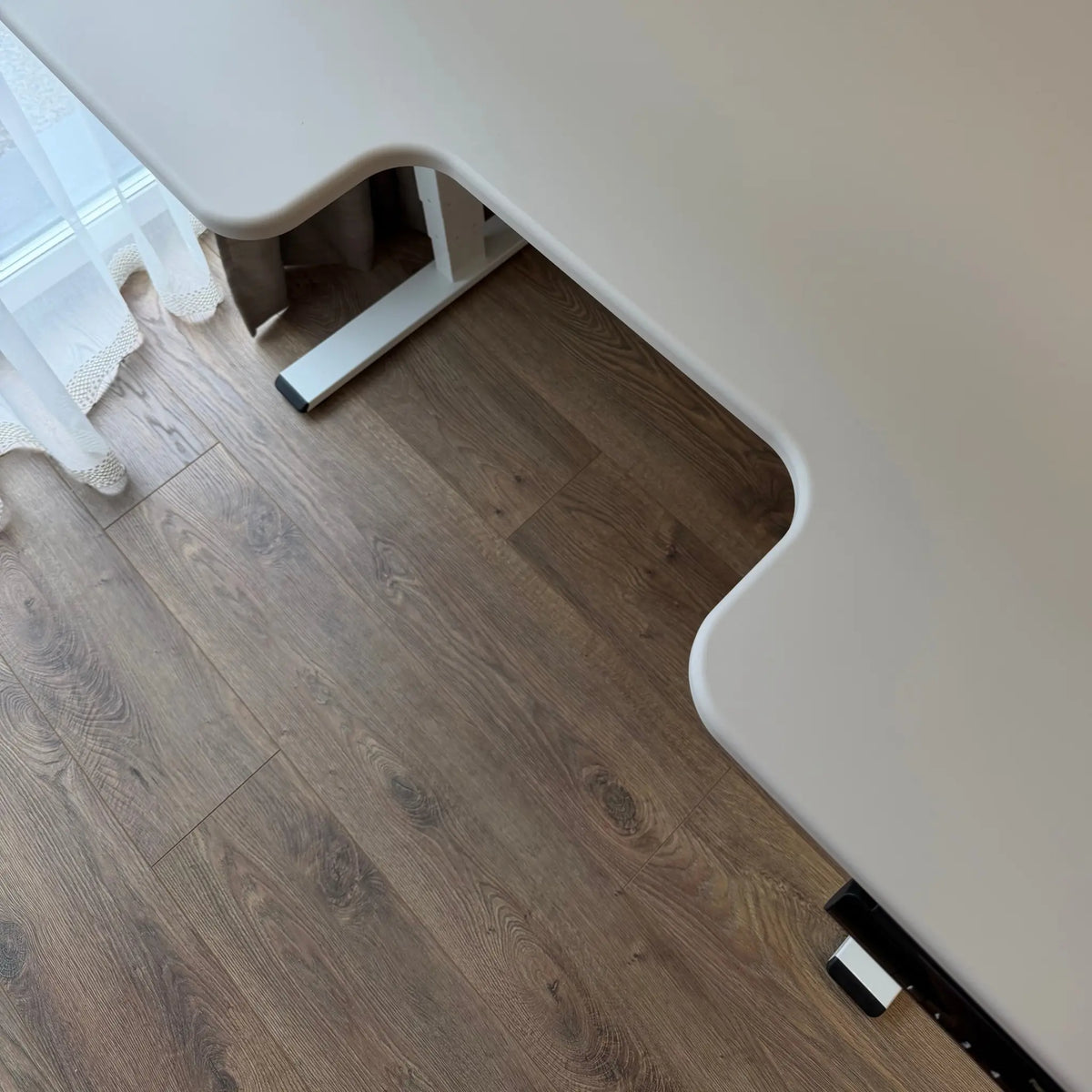

E5 height-adjustable desk with a white frame — 2 motors, MDF tabletop
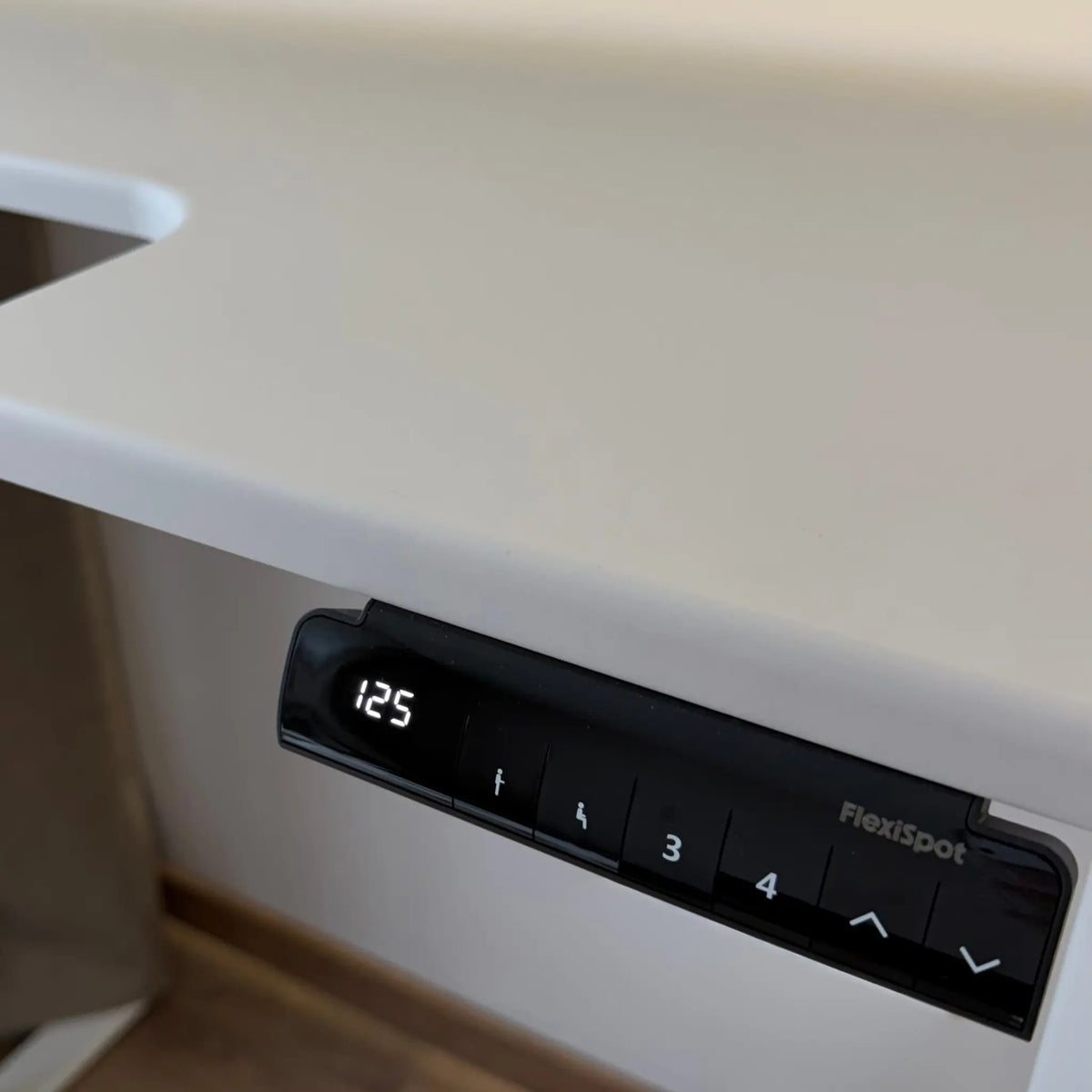
Two motors mean stability. The E5 raises up to 100 kg smoothly and quietly, with each leg powered by its own motor. The control panel remembers 4 positions, so you can switch from sitting to standing with a single touch in approximately 15 seconds.
Why get a height-adjustable desk? It's not so you can stand all day. Staying static is what harms the body, so it's enough to change positions every 40–45 minutes. Your back will thank you, and your head will work better after lunch.
We manufacture the tabletop at our own production facility to your custom size: from 100 to 180 cm, with over 20 colors to choose from, with or without an ergonomic cutout.
Technical specification
Delivery
| Armchairs | shipping within 5 business days |
| Tables in stock | shipping within 3 business days |
| Tables made to order | production time up to 21 days |
| Additional options in stock | shipping within 2 business days |
They also buy with it
E5 height-adjustable desk with a white frame — 2 motors, MDF tabletop
If you have any questions, you are always welcome to contact us. We'll get back to you as soon as possible, within 24 hours on weekdays.
Shipping Information
Use this text to answer questions in as much detail as possible for your customers.
Customer Support
Use this text to answer questions in as much detail as possible for your customers.
FAQ's
Use this text to answer questions in as much detail as possible for your customers.
Contact Us
Use this text to answer questions in as much detail as possible for your customers.
Table with one or two motors: what’s the difference
In a single-motor desk, the motor is housed in one leg, while the other is driven via a metal shaft. This makes the lift slower, the operation louder, and the desk prone to wobbling at full height, especially under the weight of a monitor or mount. When each leg has its own motor, the controller synchronizes them, allowing the desk to rise evenly, without tilting or jerking. The E5’s two motors lift up to 100 kg at speeds of up to 25 mm/s and noise levels of just 50 dB—quieter than a normal conversation—while the anti-collision system stops the desk if it encounters a windowsill, chair, or cat. For a workspace with a monitor, laptop, and equipment, we recommend dual-motor frames: stability at standing height is more important than it seems in a showroom, because you won’t be working for five minutes—you’ll be working there every day. Another feature worth considering is the ergonomic cutout in the desktop. It allows you to sit deeper into the desk so your forearms can rest fully on the surface, transferring the weight of your arms to the desk rather than your shoulders and neck. When your arms “hang” over the keyboard all day, that’s exactly why your trapezius muscles feel tight by evening. Another benefit: the monitor is positioned at the right distance, so you don’t have to reach for the keyboard. The cutout is especially useful for anyone who types, draws, or works with a mouse for six to eight hours a day.